



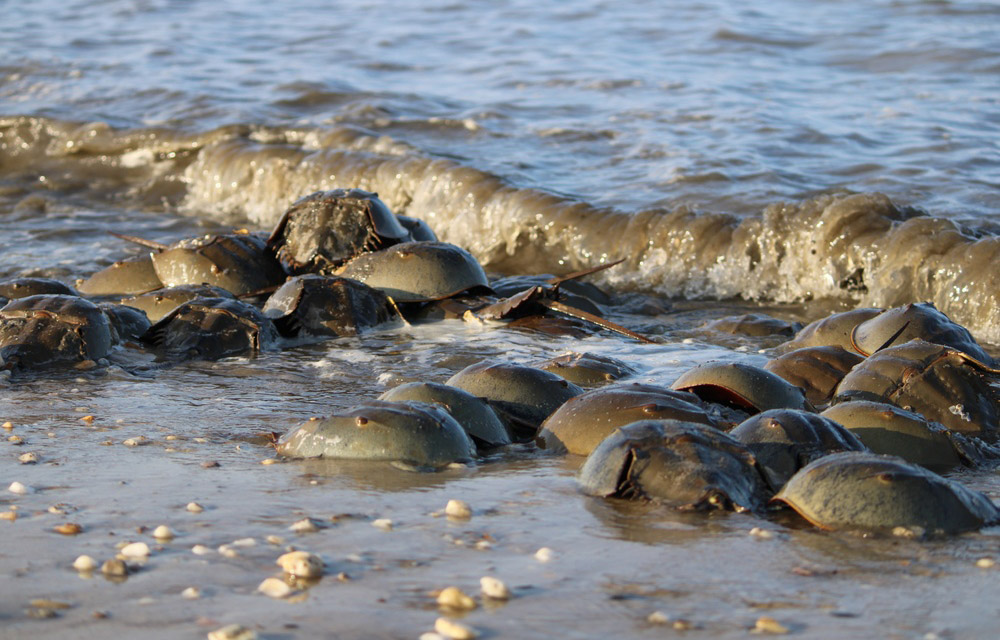
The Center for Biological Diversity (CBD) has sued the Massachusetts Division of Marine Fisheries to force the state's government to release data on horseshoe crab mortalities.
“Horseshoe crabs are incredible animals that shouldn’t be killed and injured, especially not at such high levels and in secret,” CBD attorney William Snape said in a release. “These are some of the world’s heartiest creatures, but we’re letting corporations carelessly and brutally wipe them out. Massachusetts officials need to open the books and let the public see how many horseshoe crabs are being killed in the state.”
Horseshoe crabs are both harvested for use as bait and drained for their blood, which is highly valued in the biomedical sector for testing.
The conservation nonprofit has battled both state and federal governments to secure greater protections for the crustaceans and to release data on how often bleeding leads to mortalities. Last year, a U.S. court ordered the Maryland Department of Natural Resources to turn over the data it held on horseshoe crab harvesting after CBD sued.
According to CBD, Massachusetts also keeps data on horseshoe crab mortalities secret.
In February 2026, CBD filed a public records request seeking 2024 and 2025 harvest and mortalities data; however, the state claimed the information was “strictly confidential.”
On 10 November, the group sued the state in the Superior Court Department of Suffolk, asking a judge to rule that the records are effectively biological take records and should, therefore, be in public domain under state law.
“It’s impossible to meaningfully save wildlife without having complete data made publicly available,” Snape said. “The Division of Marine Fisheries is severely harming Massachusetts’ horseshoe crabs by shielding corporate interests from accountability.”
CBD is also battling to secure Endangered Species Act (ESA) protections for horseshoe crabs.
While NOAA Fisheries denied CBD's petition in February, the nonprofit sued, claiming the government did not adequately engage with the petition or stakeholders.
“NOAA Fisheries’ negative 90-day finding made in essence a 12-month finding but without the agency first performing a species status review and providing all interested parties with procedural opportunities that accompany a 12-month review and finding,” the lawsuit states. “NOAA Fisheries’ negative 90-day finding is arbitrary, capricious, and unlawful.”
